Loading…
Sign up for our Newsletter
We will be sending out a newsletter 3 to 4 times per year with information about new publications, any upcoming conference appearances, new developments on our website, and more.
Due to the recent termination of almost all NEH grants, METS needs your support today!
Please donate here to help us continue our mission to make medieval texts available to all. Your donation will directly support our staff.
We will be sending out a newsletter 3 to 4 times per year with information about new publications, any upcoming conference appearances, new developments on our website, and more.
METS needs your help. Since 1989, we have expanded the boundaries of our understanding of medieval literary traditions and cultures through our commitment to equitable access, groundbreaking scholarship, and the support of teaching and learning. Our new website and digital reader, launched in November 2024, expanded our reach and impact. We're serving more users than ever before.
We have long been supported in this work through the generosity of the National Endowment for the Humanities, whose grants were our source of funding for staff. Like many others, our NEH funding was cut in Spring 2025, leaving our work in jeopardy.
If every person who uses our site donated just $10, we would be well on our way to being fully self-supported. Every dollar given will support our staff and help us ensure that these texts and histories remain accessible to readers around the world.

Recent Edition
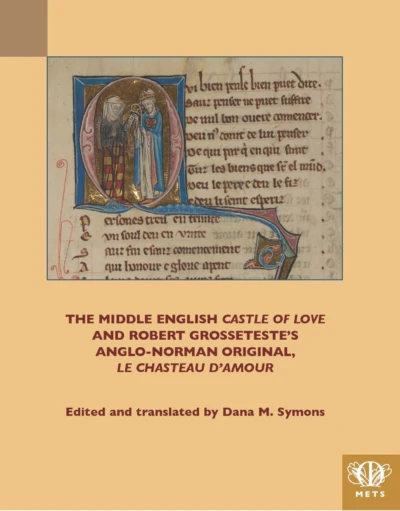
This new edition of the Middle English Castle of Love pairs this fourteenth-century poem with its Anglo-Norman source: Le château d’amour, written by English philosopher and theologian Robert Grosseteste in the early thirteenth century. Grosseteste’s poem begins with an influential interpretation of the allegory of the Four Daughters of God before deploying another allegory: that of the Virgin Mary as the Castle of Love protecting the Incarnation of Jesus. These twinned allegories drive the poem’s central theme of salvation history as Jesus, recast as the king’s son, volunteers to trade places with the castle’s prisoner, the biblical forefather Adam, imprisoned by original sin. Described by historian R. W. Southern as “the most complete outline of Grosseteste’s theology” available, the Castle of Love also showcases Grosseteste’s talents for biblical allusion, architectural imagery, romance motifs, and knowledge of feudal structures and legal principles, all marshaled in service of this striking work.
Coming Soon
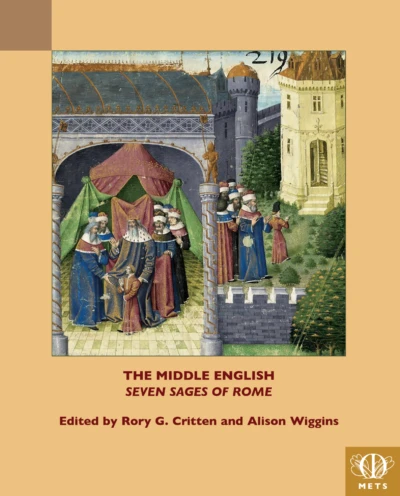
The Middle English Seven Sages of Rome was translated from French ca.1300 by an anonymous writer whom scholarship locates in London. The text relates a tale-telling competition between parties arguing for and against the execution of Florentine, the emperor of Rome’s son. The emperor’s second wife wants Florentine dead because he threatens her position at court; she tells tales of usurping sons and untrustworthy counsellors. In response, the sages tell tales of perfidious wives and the dangers of haste. The emperor vacillates until his son speaks in his own favor and the contest is decided. The frame narrative of the Seven Sages originates in eighth-century Persia; during the Middle Ages it was translated into all the vernaculars and Latin. This edition makes the Middle English poem newly available to students and researchers interested in topics including medieval misogyny, east-to-west cultural transfer, and the history of the exemplum and exemplary writing.
Publish with METS
Help shape the field of medieval studies through publishing with METS. Find the information you need about the entire editorial process, from initial proposal to print and digital publication.
Please note that we are not currently accepting new proposals. We anticipate reopening submissions in 2027.
